
Marketing attribution is how you stop throwing budget into the void. It’s the process of figuring out which marketing actions actually led to a sale, signup, or qualified lead.
In plain terms, it tells you:
- Which ads are worth the spend
- What content actually converts
- Where to optimize for ROI
- Proof your boss can brag about
When done right, marketing attribution helps you stop guessing and start scaling what works.
Why Attribution Matters (and When It Goes Sideways)
Without attribution, marketing and sales talk past each other. Marketing spends confidently, sales complains quietly, and no one can prove where the pipeline actually came from. Optimization defaults to clicks and impressions because revenue feels too hard to trace. Every performance meeting turns into a debate, not a decision.
With attribution, the argument disappears. Campaigns are judged by the pipeline they generate, not the traffic they attract. Weak channels get cut early. Strong ones get scaled with confidence. Attribution isn’t an afterthought; it’s built into every link, form, and handoff between marketing and sales.
Not All Attribution Models Are Created Equal.
Marketing attribution models don’t measure performance, they decide who gets credit.
First-touch attribution tells a simple story. Whatever introduced someone to your brand deserves the win. It’s useful for understanding awareness, but it ignores everything that actually convinces someone to buy.
Last-touch attribution does the opposite. The final click gets all the credit. It’s clean, satisfying, and wildly unfair to the content and campaigns that built trust along the way.
Linear attribution tries to be diplomatic. Every interaction gets equal weight. This works for long, nurturing funnels, but it assumes every touchpoint mattered the same, which rarely reflects reality.
Time-decay attribution favours momentum. Recent interactions matter more than early ones. It’s helpful for understanding assists like retargeting, but it tends to undervalue the content that sparked interest in the first place.
U-shaped attribution strikes a compromise. It emphasizes the first and last interactions while still acknowledging the middle. It’s not perfect, but for most lead-generation funnels, it’s the most honest place to start.
| Model | Who Gets Credit | Best For | Weakness |
|---|---|---|---|
| First Touch | The first thing they saw | Brand awareness | Ignores everything after |
| Last Touch | The last click before sale | Conversion analysis | Ignores all build-up |
| Linear | Equal credit across touchpoints | Long, nurturing funnels | No weighting nuance |
| Time-Decay | More credit to recent steps | Sales assists, retargeting | Undervalues early engagement |
| U-Shaped | 40% first, 40% last, 20% in between | Lead gen + close | Still oversimplified, but fair |
Don’t pick the model that flatters your numbers. Pick the one that reflects how people actually move through your funnel.
How to Actually Do Marketing Attribution Without Crying
Define Your Goal
Before touching tools or models, you need to be clear on what you’re trying to learn. Are you optimizing for lead quality? Trying to reduce wasted ad spend? Or figuring out which channels actually create revenue? Without a defined goal, attribution just produces numbers that feel impressive but don’t change behaviour.
Choose Your Model
Once the goal is clear, the attribution model becomes a support choice, not a philosophical debate. First-touch, last-touch, linear, or U-shaped models all tell different stories. The right one is the model that matches how your customers actually move from interest to purchase, not the one that makes a single channel look heroic. Start simple, accept that it won’t be perfect, and adjust as you learn.
Track Every Link
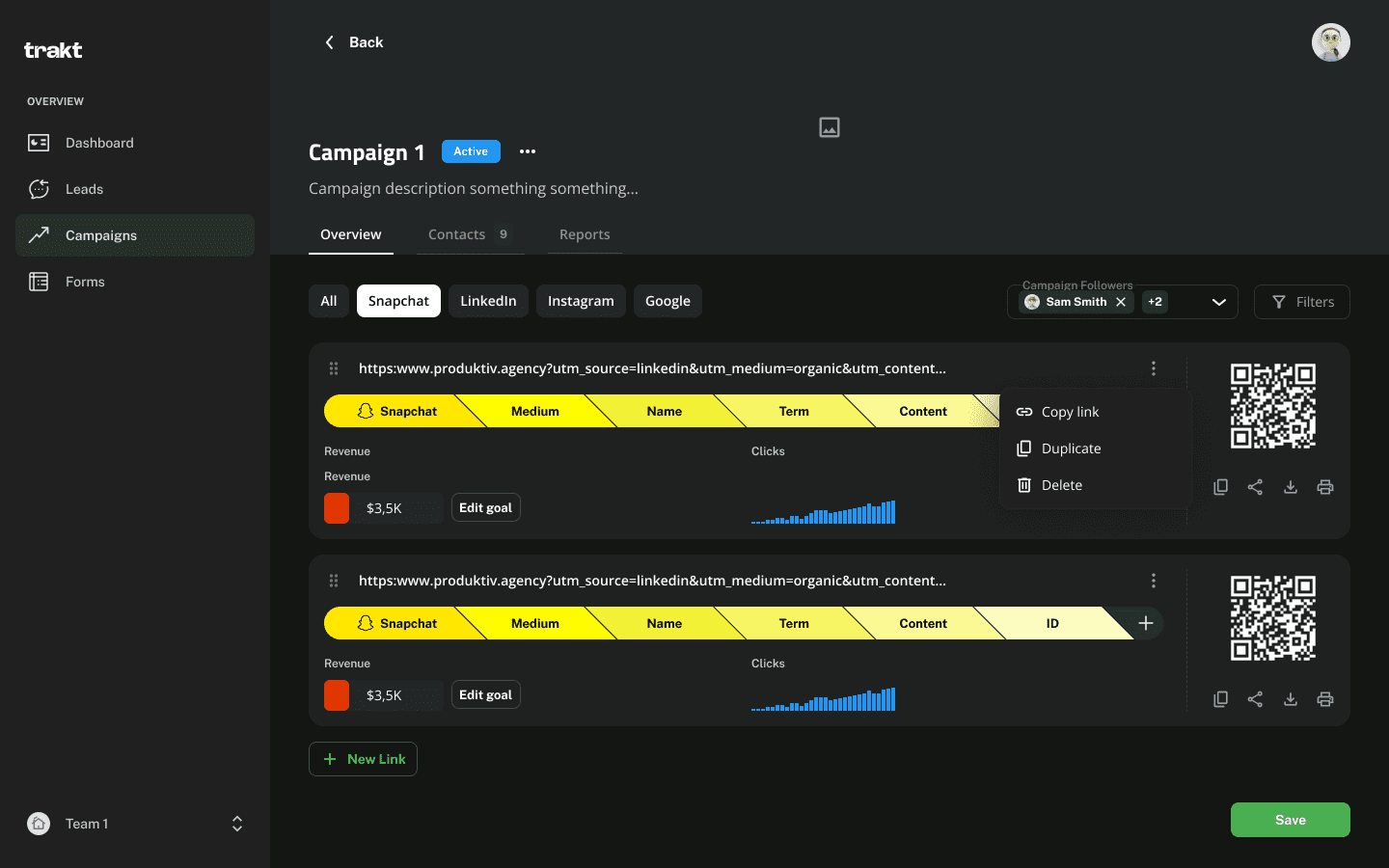
Attribution only works if every link carries its context. That means consistent UTM parameters on every campaign, across every channel. When links aren’t tagged, data arrives stripped of meaning. You may see conversions, but you’ll never know what caused them. Clean UTMs don’t create insight on their own, they make insight possible later.
Start with UTM codes like these:
[https://trakt.pro/signup?utm_source=linkedin&utm_medium=ad&utm_campaign=q2_launch](https://app.trakt.pro/register)
[https://trakt.pro/signup?utm_source=linkedin&utm_medium=paid&utm_campaign=launch&utm_content=carousel_1](https://app.trakt.pro/register)
Sync Marketing and Sales
The real breakdown usually happens between marketing and sales. Marketing knows where a lead came from, and sales knows whether it was any good. If those two views never meet, attribution stops at the click. When lead score, estimated value, and source travel together, the story stays intact from first touch to follow-up. Attribution stops being a report and starts becoming shared context.
Analyze and Iterate
Finally, attribution only matters if it informs decisions. The goal isn’t to admire dashboards, it’s to act. Double down on campaigns that produce real opportunities. Cut the ones that look busy but never close. Refine messaging based on channels that convert, not just attract attention. Attribution earns its keep when it changes what you do next.
Real Talk: Attribution Is a Mess
Attribution usually fails for boring reasons. Not because teams don’t care, but because systems don’t agree, links aren’t tagged, and complexity quietly kills follow-through.
Most teams don’t lose attribution at the dashboard. They lose it much earlier, when links go out without context or UTMs are treated as optional. Once that happens, every report downstream is already compromised. You can’t reconstruct intent after the fact.
The next break happens between marketing and sales. Marketing sees campaigns. Sales sees conversations. When those views live in different tools, insight never compounds. Each team optimizes in isolation, and attribution quietly stops at the click.
Then there’s tooling. Attribution doesn’t fail because it’s too simple, it fails because it’s too heavy. If reporting requires a specialist, a consultant, or a monthly cleanup ritual, it won’t survive real workflows. Complexity doesn’t scale clarity. It suffocates it.
Privacy finishes the job when it’s bolted on instead of built in. Consent gaps, blocked scripts, and partial data don’t throw errors, they just erode confidence until no one trusts the numbers enough to act on them.
What actually works is less glamorous.
Attribution improves when teams agree on a single way to tag links and actually use it. When lead source, quality, and outcome travel together instead of living in separate systems. When the goal isn’t perfect modeling, but dependable signal. When tools fit the way people already work, instead of demanding new habits just to keep data intact.
Attribution doesn’t need to be smarter than your team.It just needs to stay intact from click to close.
Attribution in Real Life: A Campaign Breakdown
Here’s what attribution looks like when it actually works.
A prospect first encounters your brand through a LinkedIn ad. That initial click creates awareness and earns meaningful credit. Later, a case study answers their objections and keeps them moving. Finally, a retargeting ad brings them back when they’re ready to convert.
Each step plays a role. None of them exist in isolation. Attribution doesn’t crown a single winner, it explains how the deal came together.
| Stage | Channel | Credit |
|---|---|---|
| Awareness | LinkedIn Ad | 40% |
| Mid-Funnel | Case Study | 20% |
| Conversion | Retargeting Ad | 40% |
The result isn’t just a closed deal. It’s understanding why it closed.
Common Attribution Pitfalls
Most attribution failures aren’t technical, they’re structural.
When links aren’t tagged, attribution never even starts. Without consistent UTMs, traffic shows up stripped of context. You know someone converted, but not why.
When data lives in silos, insight never compounds. Marketing sees clicks. Sales sees conversations. Without a shared view of lead quality and source, both teams optimize blindly.
When tools are overly complex, attribution becomes aspirational. If reporting requires a specialist or a full-stack developer, it doesn’t happen consistently, or at all.If reporting requires a specialist or a full-stack developer, it doesn’t happen consistently, or at all.When privacy is ignored, attribution breaks quietly.
When privacy is ignored, attribution breaks quietly. Consent, anonymization, and compliance aren’t optional anymore. Ignoring them creates gaps you won’t notice until the data stops lining up.Consent, anonymization, and compliance aren’t optional anymore. Ignoring them creates gaps you won’t notice until the data stops lining up.
Attribution fails fastest when teams expect tools to fix process problems.
Good attribution isn’t complicated, it’s disciplined.
Fix Your Attribution (Checklist)
Attribution doesn’t need to be perfect; it needs to be usable.
1. Start by standardizing how links are tracked.
A clean, shared UTM structure does more for attribution than any dashboard ever will.
2. Make sure marketing and sales see the same funnel.
Lead source, score, and value should travel together, not live in separate tools.
3. Optimize for clarity, not completeness.
The goal isn’t to model every possible touchpoint. It’s to understand which efforts reliably create real opportunities.
What to Look For in an Attribution Tool
- Easy UTM generation
- Real-time dashboards
- Sales and marketing integration
- No login headaches
- Peace of mind
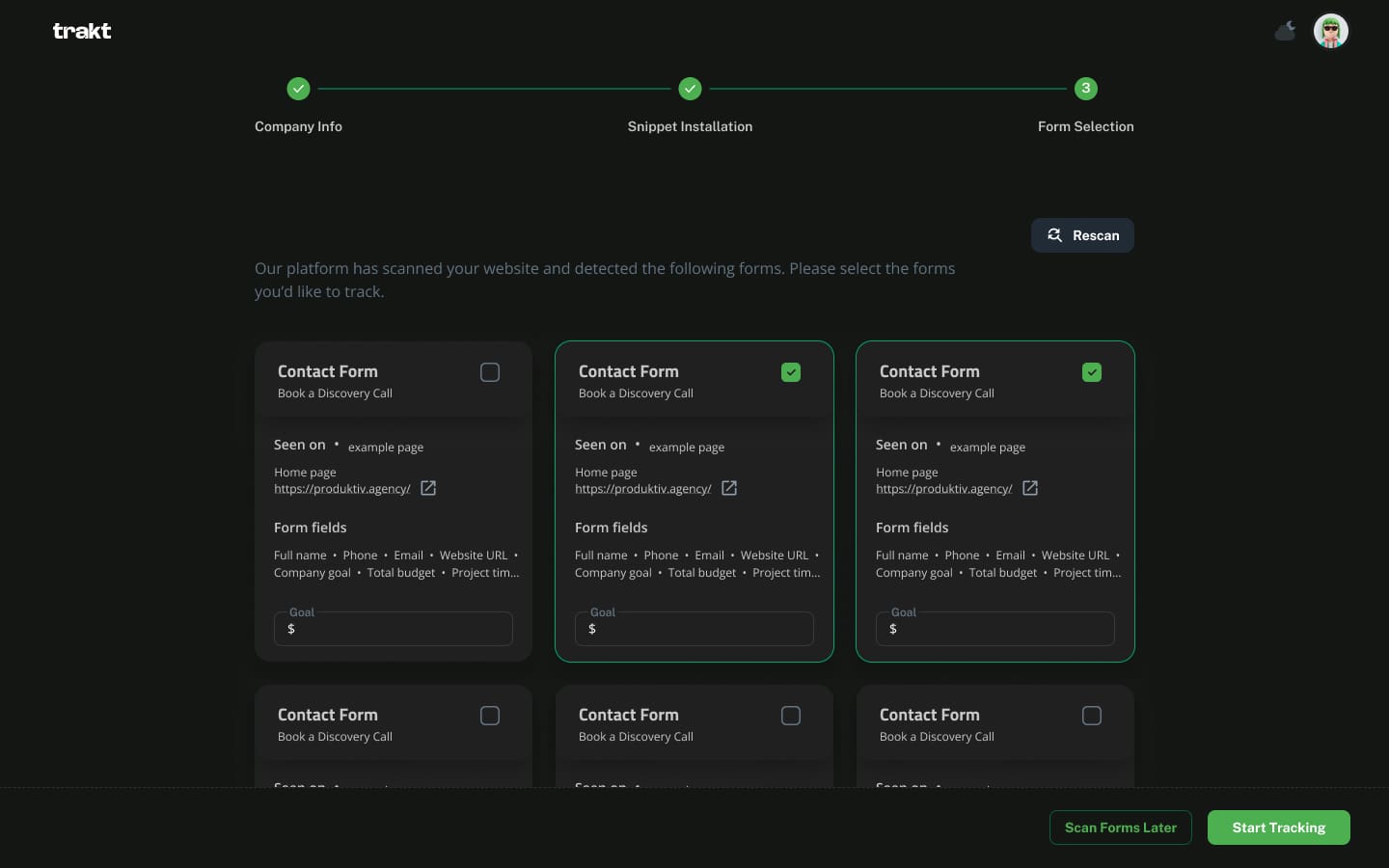
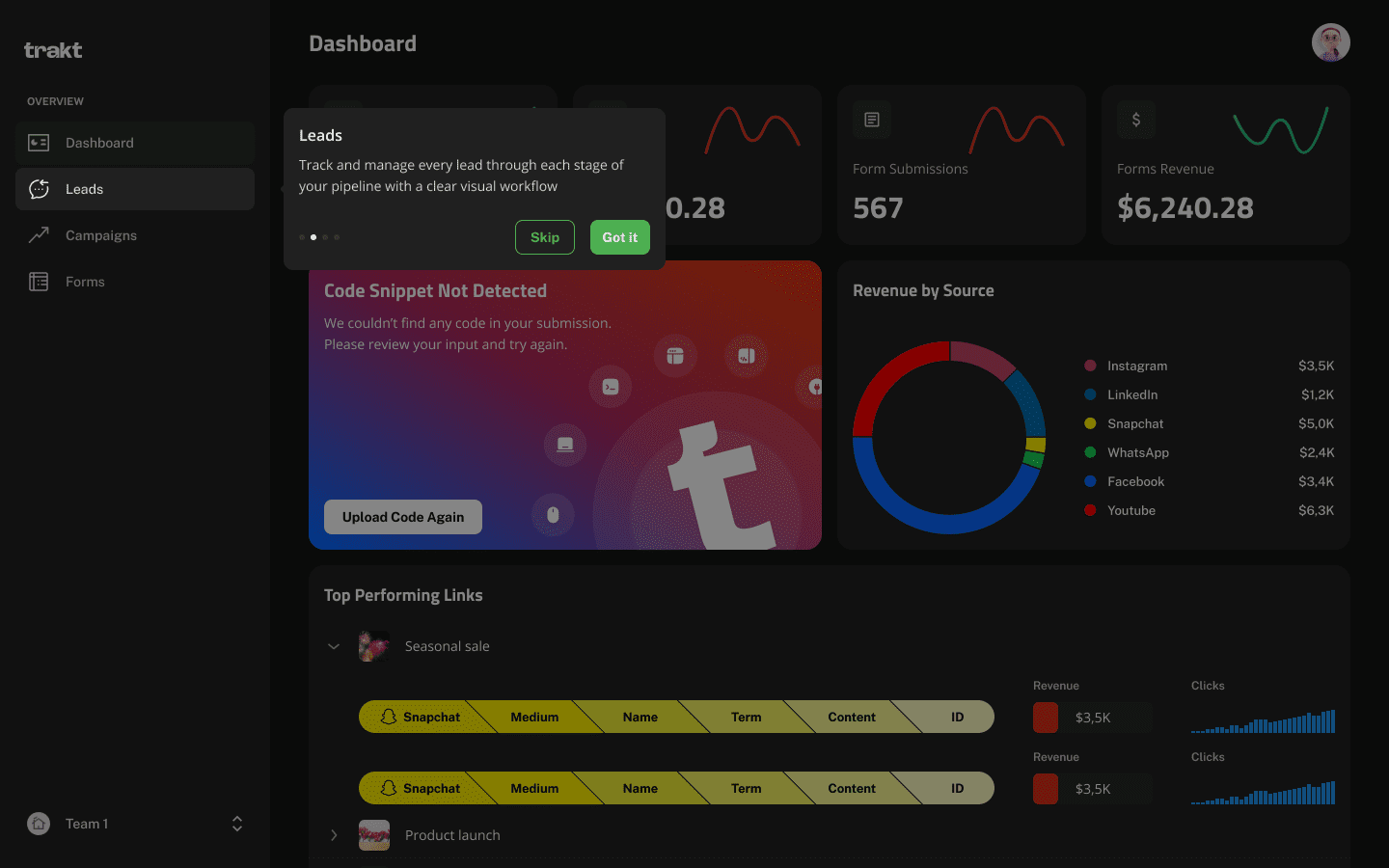
Traktdoes all that. And then some.

Want to Learn More About Attribution?
- HubSpot’s Guide to Marketing Attribution
- Forrester on Marketing Performance
- UTM Best Practices – Analytics Mania
Try Trakt
You don’t need a $20k tool to track your marketing attribution. You need visibility, clarity, and a way to connect marketing with sales, without turning your team into part-time analysts.
Start with a link. Track the clicks. Score the leads. Show the results.Welcome to attribution, the Trakt way.