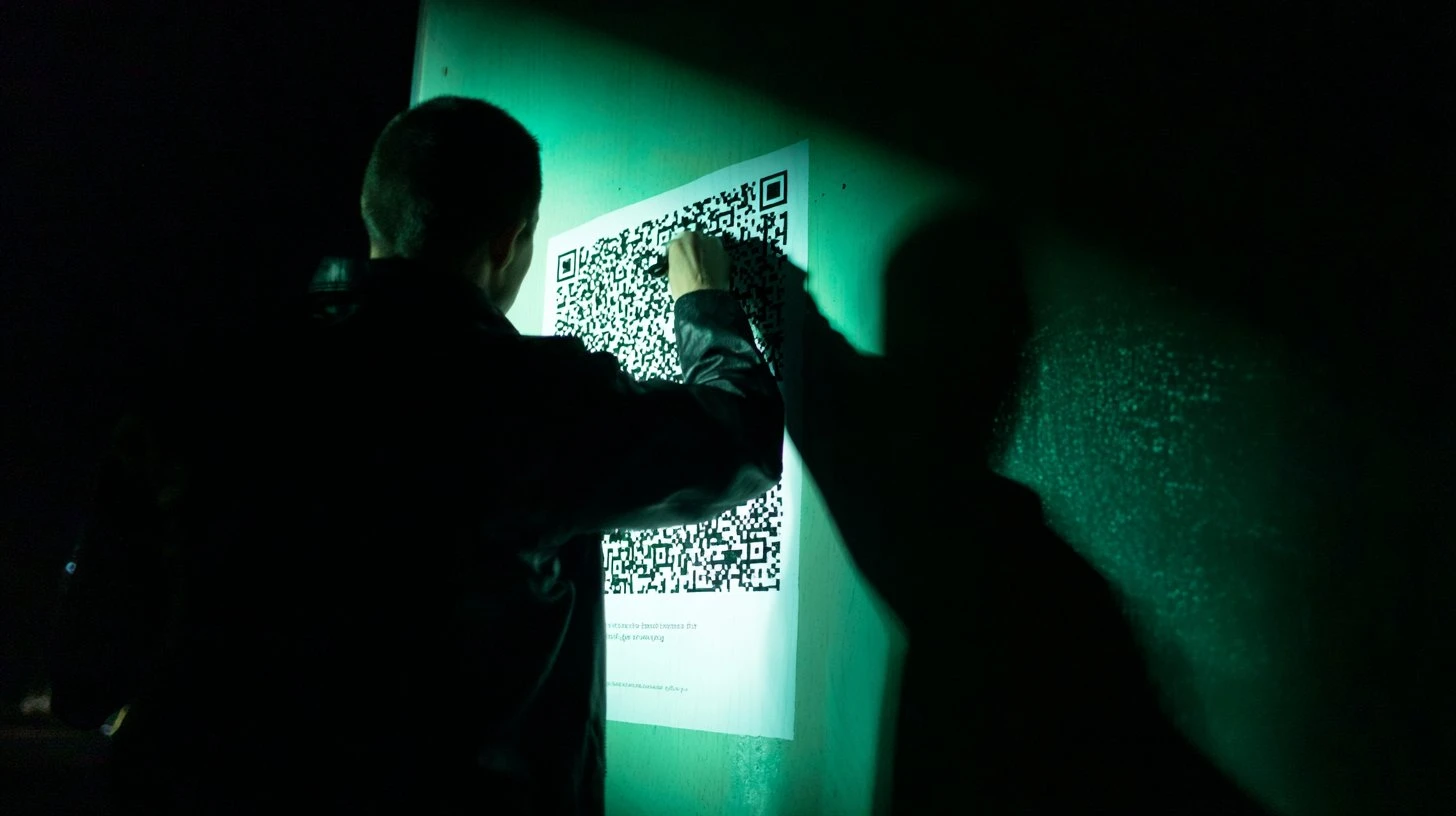
You just spent $50,000 on a highway billboard campaign.
Three months later, your CFO asks for ROI.
You pull up Google Analytics. Website traffic spiked during the campaign. Great, right?
But the source data says "Direct" and "Organic Search." Nothing traces back to the billboard.
This is the problem with tracking offline signage. Not that offline signage doesn't work. You can't prove it works.
Meanwhile, your Facebook campaign shows precise data. Clean. Trackable. Defensible.
Guess which budget gets cut next quarter?
Offline Signage Isn’t Dead. It’s Untracked.

The problem with offline advertising isn’t effectiveness. It’s attribution.
Digital channels win budget battles because they leave a trail. Every click, view, and conversion is logged. Offline leaves none, even when it’s doing real work.
That gap distorts decision-making.
A Facebook ad might get 2.5 seconds of attention before it’s skipped.
A highway billboard, by contrast, is seen by the same commuter 20–30 times a month. It has territorial presence. The repetition compounds. Recognition builds. Intent forms.
Trade publications reach decision-makers when they're actively researching solutions. Not mindlessly scrolling Instagram at 11 PM.
Posters and leaflets accomplish hyper-local targeting that would cost a fortune in digital. Coffee shop bulletin boards reach neighbourhood residents. Gym posters reach fitness enthusiasts. Event programs reach engaged attendees. You're matching context to audience with precision.
46% of consumers perform a brand search online immediately after seeing an out-of-home (OOH) ad, yet without tracking offline signage, this is almost always misattributed as "Organic Search" or "Direct" traffic.
And unlike digital, offline is unskippable. You can block ads, mute videos, and scroll past banners. You can’t scroll past a billboard on your commute.
Plus, 81% of consumers trust printed materials (flyers, brochures, catalogs) more than digital ads.
Here’s the irony: Offline often delivers stronger brand recall and lower cost-per-impression than digital, yet consistently loses budget because it can’t prove its impact.
Not because it doesn’t work. Because it disappears inside attribution models built for clicks, not influence.
Tracking offline signage requires a whole different infrastructure than what most teams are using. When measurement favors what’s easiest to track, spend follows, even when the data is incomplete.
Offline outperforms, but loses budget.
The Attribution Black Hole
This is what breaks attribution for every offline channel.
Sarah sees your billboard Monday morning. Stuck in traffic. Your message registers.
Wednesday, she mentions your company to a colleague over coffee.
Friday afternoon, she finally researches. Googles your company name. Browses your site. Bookmarks it.
Next Tuesday, she returns directly and fills out your demo request form.
Your analytics show: Source: "Direct Traffic"
Your analytics miss: The billboard that started everything nine days earlier.
Why Offline ROI Stays Invisible:
Physical ads don't ping your analytics. A billboard impression generates zero data trail. Digital leaves breadcrumbs everywhere… click data, session IDs, referrer URLs. Offline leaves nothing.
Time delay destroys the connection. By the time Sarah converts, she's also clicked your LinkedIn ad, read your blog, and attended your webinar. Multi-touch journeys obscure everything. B2B buyers interact with your brand 7-12 times before purchasing. That billboard impression from nine days ago? Buried under eight other touchpoints.
But touchpoint twelve is the demo request form. That's what your CRM records as the source.
The Compounding Cost
When you don't know how to start properly tracking offline signage, you can't optimize.
Next year's media buy becomes guesswork. You're gambling $50,000 because you can't see what's working.
The math: Companies waste 30-40% of offline budgets on underperforming placements while underfunding winners. Not because they're bad at marketing. Because they're flying blind.
How To Start Tracking Offline Signage (A 3-Level Attribution Model)
Tracking offline signage isn’t about piling on tactics. It’s about increasing attribution fidelity as your campaigns get more expensive and more complex.
Each level solves the failure of the one before it.
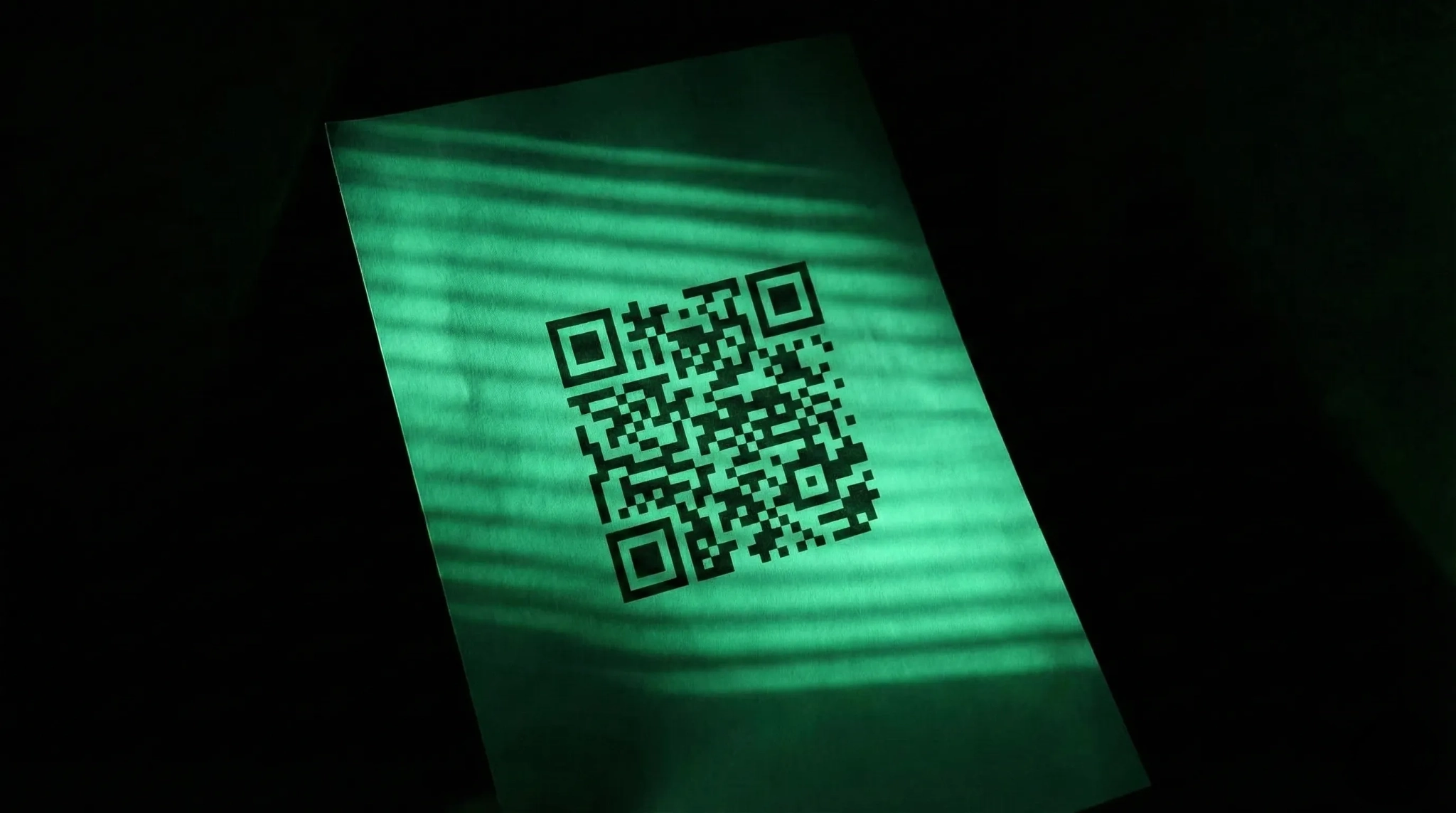
Level 1: Response Capture (Baseline Visibility)
At the most basic level, offline ads need a way to create a measurable response. This is the most bare bones step of tracking offline signage.
QR codes and vanity URLs do exactly that. They give people a clear, low-friction action and create a direct bridge from physical media to digital behaviour.
This level answers one question only: Did anyone respond to this placement at all?
It’s the minimum viable attribution. Without it, everything else is guesswork.
Level 2: Conversion Signals (Directional Truth)
Once responses exist, the next problem is proving intent.
Promo codes and call tracking add explicit conversion signals to offline campaigns. A redeemed code or a phone call tied to a specific number removes ambiguity; the customer is telling you exactly which ad drove action.
This level answers a harder question: Which placements are driving real outcomes, not just visits?
It won’t capture every conversion, but it provides strong directional data for optimization.
Level 3: Persistent Attribution (Actual Credit)
This is where most offline attribution breaks, and where real ROI finally becomes visible.
Persistent attribution ensures the first offline touchpoint survives long enough to receive credit, even if the conversion happens days or weeks later through another channel.
Campaign-specific landing pages, paired with automatic source capture, allow attribution to persist across sessions and devices. When someone returns later via search, email, or direct traffic, the original offline source is still attached at conversion.
This level answers the only question that truly matters: Which offline investments are actually driving revenue?
Without persistence, offline always loses credit to the last digital touch.
The Takeaway
You don’t need more tactics. You need attribution that matures with your spend.
Baseline response shows interest. Conversion signals show intent. Persistent attribution shows ROI.
This is what tools like Trakthandle behind the scenes, automatic form enrichment that maintains attribution through multi-touch journeys.
How to Start Offline Conversion Tracking
Pick Your Next Offline Campaign
Add one QR code with campaign tracking. Use consistent UTM parameters. Test the code before printing - scan it from six feet away in poor lighting. If it doesn't work easily, fix it before you print 500 posters.
Watch the data flow in. Scans. Landing page visits. Form submissions. Actual conversions from that specific placement.
Compare against your untracked campaigns. The difference will be stark. Not because the trackable campaign performs better. It might perform exactly the same, but now you can see it performing. You have data. You can optimize.
Expand Systematically
Add tracking to each new campaign. Build a library of performance data across placements, locations, creative variations.
Three months. Six campaigns tracked. Real ROI data replacing guesswork.
Six months from now, you're making media buys based on actual performance. Next year, while competitors argue about whether offline "feels worth it," you're scaling placements that deliver 4x ROI and cutting everything below 2x.
The infrastructure to begin tracking offline signage already exists. QR codes are standard. Tracking links are simple. Tools like Traktautomate the complexity (consistent UTM generation, automatic form enrichment, clean CRM integration) so you focus on strategy instead of spreadsheet management.
Your offline campaigns deserve the same measurement rigor as your digital ones.
Start tracking offline signage automatically with Trakt. No complicated setup. No manual tracking. Just clean data from physical signage to closed deals.