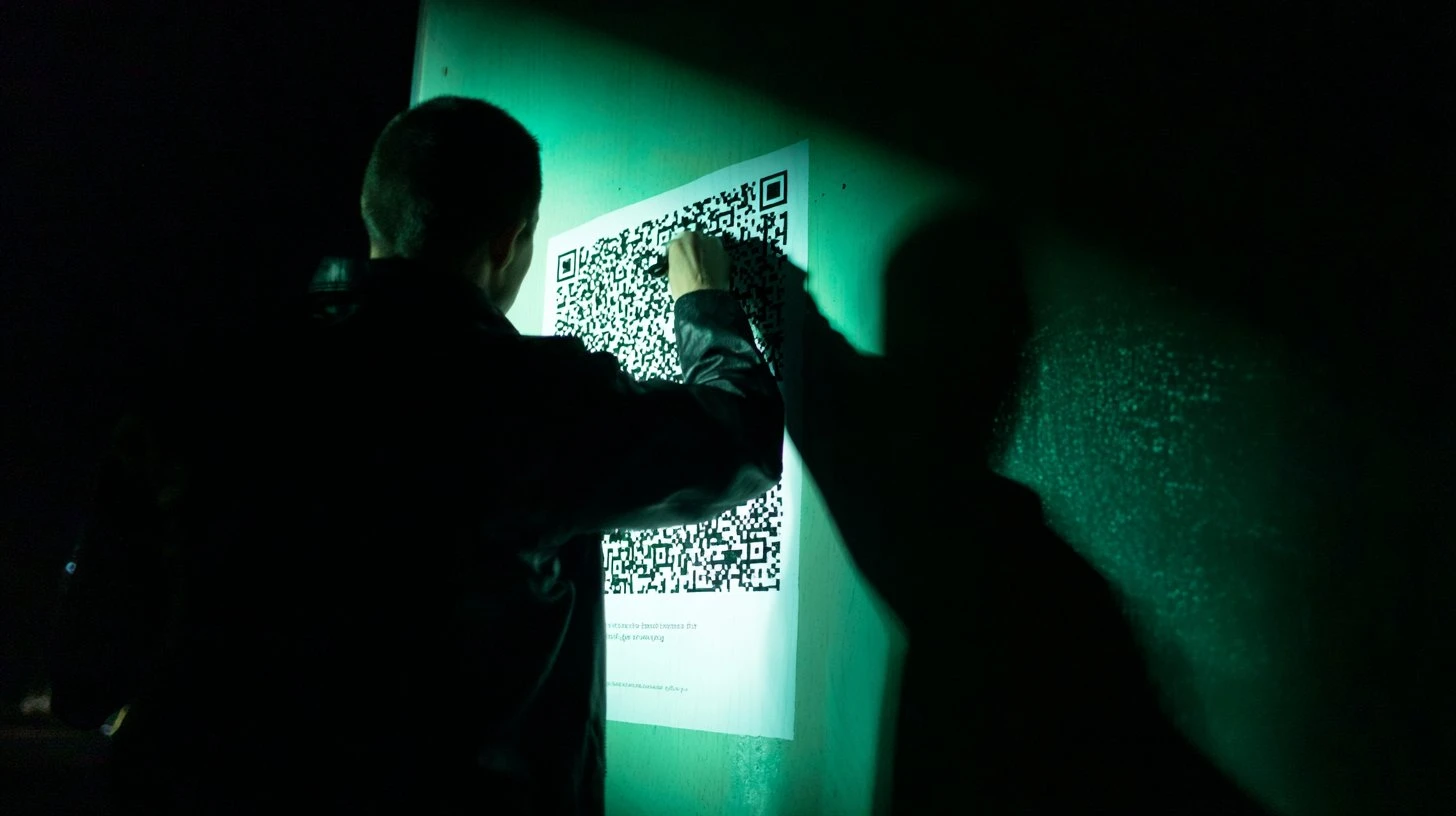
The highway billboard is a classic marketing staple that currently faces a modern crisis of justification. Imagine spending $50,000 on a massive roadside installation only to have your CFO ask for the specific return on investment three months later. You pull up Google Analytics and see a traffic spike, but the data is attributed to "Direct" or "Organic Search" rather than the physical asset you paid for. This scenario highlights why understanding what is a utm code has become the primary requirement for anyone running a multi-channel campaign.
Digital advertising on platforms like Meta or Google provides a dashboard full of clear conversions and lead costs. In contrast, the billboard often remains a shrug of the shoulders in the boardroom because its data trail is invisible. This lack of proof leads to budget cuts regardless of how well the creative actually performed. The attention math is actually in favor of the physical world, where commuters might see your message 20 times a month without the ability to use an ad blocker.
Bridging this measurement gap requires a response vehicle that connects a physical glance to a digital record. To move your marketing report from "traffic seemed up" to "this specific billboard generated 143 form submissions," you need a standardized tracking system. This system relies entirely on the Urchin Tracking Module, or UTM.
Decoding the Anatomy of a Tracking Link
Understanding what is a utm code begins with looking at the raw text appended to your website address. These codes are just tags that tell your analytics software where a visitor came from and what they were looking at when they clicked. A standard URL like trakt.pro becomes a data-rich tracking link when parameters are added.
The structure of a UTM is modular, allowing you to stack different pieces of information. When you ask what is a utm code used for, the answer is granularity. You are no longer just seeing "social media" as a traffic source; you are seeing "LinkedIn," "Sponsored Post," and "October Product Launch" as distinct data points. This distinction is vital when comparing utm vs url functionality, as a standard URL carries no context about the user's journey.
The Five Standard UTM Parameters
| Parameter | What it tracks | Example Value |
| utm_source | The specific platform or site sending traffic. | billboard, google, linkedin |
| utm_medium | The type of marketing channel used. | outdoor, cpc, email |
| utm_campaign | The overall marketing effort or product launch. | highway-101-north, q1-sale |
| utm_term | Used for paid search keywords (optional). | crm-software, utm-tracking |
| utm_content | Differentiates between different versions of an ad. | version-a, red-button |
[!NOTE] Pro Tip: UTM parameters are case-sensitive. If you use "Billboard" in one link and "billboard" in another, your analytics will report them as two separate sources. Always use lowercase to maintain clean data.
The Persistence of the Attribution Black Hole
The difficulty with physical ads is that they do not naturally ping your analytics software. When a potential customer sees a poster at 8:00 AM, mentions it to a colleague at noon, and finally Googles your name a week later, the original source is lost to the "Direct Traffic" bucket. This creates a massive gap where your most influential early-stage touchpoints are buried under later digital clicks.
When you cannot track these interactions, you cannot optimize your media buy. Companies often find themselves wasting a significant portion of their offline budget on placements that do not drive action, simply because they are flying blind. Identifying the specific disadvantages of untracked offline marketing is the first step toward fixing the data leak.
A study by the Interactive Advertising Bureau (IAB) suggests that consistent cross-channel attribution can improve overall campaign efficiency by up to 30%. Without UTMs, that 30% remains invisible, making it impossible to scale the winners and cut the losers.
How to Create a UTM Code for Offline Signage
Creating a system that eliminates the disadvantages of offline marketing requires a systematic approach to link generation. You want a process that is repeatable so every team member produces the same data quality.
Step 1: Standardize Your Naming Convention
Consistent data is the foundation of any reporting. You need a single source of truth for how codes are appended to your URLs so that every campaign is easily filterable in your CRM.
- Define your Sources: Create a list of approved names for your platforms (e.g., billboard, print_ad, radio).
- Define your Mediums: Categorize your channels (e.g., outdoor, offline, social).
- Use Delimiters: Decide between using hyphens or underscores to separate words (e.g., q1-campaign vs q1_campaign).
Step 2: Generate the Tracked URL
Take your target landing page and append your standardized parameters. If you are promoting a specific offer on a highway billboard, your raw URL might look like yoursite.com/offer?utm_source=billboard&utm_medium=outdoor&utm_campaign=highway-101.
Step 3: Map Your Physical Coordinates
Assign a unique campaign name to every specific physical location. If you have five billboards, each one should have its own campaign parameter (e.g., billboard-north, billboard-south) so you can track which location has the highest conversion rate.
Step 4: Create a Response Vehicle
Since long URLs with UTM codes are impossible for a human to type or remember, you must hide the tracking link behind a user-friendly interface. This is typically done through QR codes or vanity URLs.
Step 5: Verify the Destination
Always test your final link before going to print. Scan the QR code from the actual distance a customer will be standing to ensure it resolves correctly in different lighting conditions.
Pro Tip: When someone asks what does a utm code look like, show them the raw URL, but explain that the customer should only ever see the "pretty" version (the vanity URL or QR code).
Bridging the Gap: QR Codes and Vanity URLs
When discussing what is a utm code, we have to address how to get people to actually use them. In the digital world, the code is hidden behind a button or a hyperlinked word. In the physical world, the code must be translated into a scannable or typable format.
Comparing Attribution Clarity
| Feature | Digital Advertising | Traditional Offline Signage |
| Initial Impression | Tracked via pixel/session ID | Invisible to analytics |
| Click/Action | Recorded instantly in dashboard | Requires manual user input |
| Attribution Model | Usually Last-Click or Multi-Touch | Mostly "Gut Feeling" or "Direct" |
| Optimization | Real-time based on CPL | Delayed or impossible |
| Customer Trust | Often viewed as intrusive | 71% trust print more than digital |
The most common mistake in offline advertising is using a generic homepage URL. When the billboard says "Visit OurCompany.com," you have surrendered all hope of attribution. Instead, every distinct physical asset should have its own dedicated path into your digital ecosystem.
Since the pandemic, QR code adoption has exploded, making scanning a habitual behavior. Your phone camera automatically recognizes codes, allowing a user to move from a physical billboard to a tracked digital session in under three seconds. For those who prefer typing, a short vanity URL like Brand.com/highway should automatically redirect to the long, tracked URL behind the scenes.
Persistent Source Capture and Form Enrichment
Once a user enters through your unique link, your website needs to remember that source even if they do not buy immediately. B2B buyers typically interact with your brand 7 to 12 times before purchasing. If they scan a code on Monday but return via Google on Wednesday, your system must attribute the final sale back to that original Monday scan.
This is where the difference between utm vs url becomes critical. A URL is a location, but a UTM is a memory. By using hidden fields in your lead forms, your website can "read" the UTM parameters from the user's session and inject them into the lead record. This transforms a generic lead into a qualified prospect with a clear history of how they found you.
The 4-Step Offline Tracking Quick-List
- Identify your physical asset and its location.
- Generate a unique UTM-tracked URL for that specific spot.
- Shorten that URL into a vanity link or generate a high-contrast QR code.
- Deploy the asset and monitor your CRM for specific campaign tags.
Why Agencies Are Moving Away from Spreadsheets
For years, the standard way to manage tracking was a massive, shared Google Sheet. One team member would use Facebook as a source, another would use fb, and by the end of the quarter, the data was a fragmented mess. This is why people constantly ask how to create a utm code in a way that does not break their reports.
The manual management of these links is the primary point of failure for attribution. When the process is tedious, people skip it. Sales teams struggle to work with marketing because they do not see the value of the leads being passed over. If the salesperson does not know a lead came from a specific high-value billboard, they might treat it with the same priority as a low-intent social media click.
Real-world attribution only works if the salesperson knows exactly which billboard or print ad the lead came from the moment they start the follow-up. This requires a transition from manual link building to an automated infrastructure.
Moving from Understanding to Execution with Trakt

Solving the attribution puzzle is ultimately about getting marketing and sales on the same track. We built Trakt to handle the invisible heavy lifting that makes offline advertising feel like a gamble. It is a middle-ware solution that you install on your website to standardize all of your UTM parameters and automate your link building.
Instead of manually managing spreadsheets, Trakt allows you to scan your website, identify your lead forms, and add hidden field attribution automatically. When a lead comes in, the original campaign data is injected directly into the record. Your sales team can then qualify leads directly from their inbox, seeing the lead score, deal value, and original source without ever having to log into another interface.
The goal of Trakt is to bring UTM tracking to the masses by making it impossible to mess up. Whether you are tracking a $50,000 billboard or a stack of coffee shop flyers, the system ensures your data is clean, your sales team is informed, and your CFO is happy.
Standardized Naming for Common Assets
| Asset Type | Primary Tracking Method | Best Practice |
| Billboard | QR Code + Vanity URL | High contrast, large enough to scan from cars |
| Trade Publication | Custom Landing Page | Match the ad copy to the page headline |
| Direct Mail | Unique Promo Code | Offer an incentive for using the specific code |
| Radio/Podcast | Vanity URL (Short) | Must be "stupidly simple" to remember |
This transition from understanding the disadvantages of offline marketing to executing a trackable strategy is how you protect your budget and prove your worth. You can explore how this automation works by visiting link.trakt.pro and seeing the difference between guessing and knowing.
Offline Tracking FAQ
Do UTM codes affect my SEO or search rankings?
Short answer: No. Search engines like Google generally ignore UTM parameters when indexing pages. However, to be safe, you should always have canonical tags set up on your website. This tells Google, "Hey, even if there are ten different UTM versions of this URL, they all point to this one 'master' page." This prevents any potential "duplicate content" issues.
If I use a vanity URL like Brand.com/TV, how does the UTM actually get there?
You use a 301 Redirect. In your website’s backend (or via a plugin like Redirection for WordPress), you tell the server: "Whenever someone types Brand.com/TV, send them to Brand.com/landing-page?utm_source=tv&utm_medium=offline…."
What is the "Attribution Window," and why does it matter for billboards?
The article mentioned the "Attribution Black Hole." Most analytics tools have a default "window" (often 30 to 90 days). If someone scans your billboard today but doesn't buy for four months, that connection might be lost depending on your settings.
Pro Tip: If you have a long sales cycle (like B2B software or real estate), you need a tool like Trakt or a robust CRM to "staple" that original UTM source to the lead’s permanent record so the data doesn't expire.
Why is my "Direct" traffic still high even though I'm using QR codes?
There are three likely culprits:
The "Leapfrog": People see the QR code but are too lazy to scan it, so they just Google your brand name. (This is why vanity URLs are a great backup).
Case Sensitivity: You used utm_source=Billboard instead of billboard, and your filter didn't catch it.
Technical Error: The redirect on your vanity URL is stripped of its parameters (a common "broken" redirect issue).
How do "Hidden Fields" on a form actually work?
When a user arrives with a UTM code, the code stays in the URL. A small script on your site (or a tool like Trakt) "reads" that URL and automatically plugs the UTM values into invisible boxes inside your contact form. When the user hits "Submit," those tags are sent to your CRM along with their name and email.
Why can’t I just keep using my free Google Sheets template?
You can! But as a team grows, "Spreadsheet Entropy" sets in. Someone will eventually type "Face-book" instead of "facebook," and your quarterly report will be a nightmare to clean up. Tools like Trakt act as a "governor" for your data, they force everyone to use the same names so your data stays pristine without you having to play "Data Janitor" every Friday.