
It's Monday 9 AM, after your biggest tradeshow of the quarter.
You’re staring at four versions of “TradeShow_FINAL_v3_EDITED.xlsx.” None of them agree.
You open the first spreadsheet: Column headers don't match the second file. Lead counts are different in version three. Someone's edits got overwritten. The "final" version isn't actually final. Meanwhile, your competitors followed up with those same leads 48 hours ago.
This is spreadsheet hell. And it's costing you deals.
This is the moment most tradeshow ROI conversations die. Not because the event failed, but because the data can’t agree on reality.
There's a better way. A centralized tradeshow dashboard gives you a single source of truth: real-time visibility, automated tracking, and zero version-control nightmares.
No more guessing which file is correct. No more meetings wasted reconciling conflicting data.
Just clean leads, instant follow-up, and actual ROI numbers you can defend.
The Cost of Not Having a Single Source of Truth
A “single source of truth” isn’t a nice-to-have. Without it, tradeshow ROI debates are unsolvable, because sales and marketing are literally answering different questions with different data.
Companies with aligned sales and marketing teams get 208% more revenue and are 67% more effective at closing deals. But alignment is impossible when teams work from different datasets.
Data consistency means everyone references identical metrics. Faster decisions happen because no time gets wasted validating numbers. True collaboration emerges, sales sees marketing's lead generation efforts, marketing sees sales follow-up rates. Both teams work toward shared revenue goals instead of separate vanity metrics.
For tradeshows specifically, the impact is dramatic. Lead handoff happens in hours, not weeks. Attribution is crystal clear for which events drive real pipeline and which are vanity projects. Budget justification gets backed by real data, not guesswork. Post-show follow-up doesn't fall through cracks.
But creating a single source of truth requires the right infrastructure. That's where a proper tradeshow dashboard comes in. Not just any dashboard: one purpose-built for the chaos of event marketing.
Why Spreadsheets Collapse Under Tradeshow Pressure
Spreadsheets persist because they're familiar. They're flexible. They feel "good enough." But there's a breaking point where "good enough" becomes actively harmful.
When forced to handle event attribution, spreadsheets fail in three predictable ways.
First: Version Control
Five people editing means five realities. Someone’s update overwrites another’s. The “final” file is never final.
Second: Silent Errors
88% of spreadsheets contain mistakes, broken formulas, deleted rows, bad assumptions. Event budgets deserve better than guesswork.
Third: Delayed Follow-Up
Leads sit in inboxes while competitors respond first. Half of all deals go to the first responder. Spreadsheets make you slow.
This isn’t inefficiency. It’s structural failure. Spreadsheets weren’t built to preserve attribution across time, teams, or touchpoints.
This is the gap purpose-built tradeshow dashboards exist to solve: enforcing persistent, revenue-linked attribution across every tradeshow touchpoint.
How Tradeshow Dashboards End ROI Debates
A proper tradeshow reporting dashboard isn't just digitizing your spreadsheet. It's rebuilding your entire tracking system around what actually matters: capturing leads, qualifying them fast, and proving ROI.
Four things change when dashboards replace spreadsheets.
1. Lead Qualification Happens in Real Time
The interface is a Kanban board showing every lead, organized by stage: Qualified, Not Qualified, Won. Each lead card displays contact info, company details, when they engaged, and which campaign brought them in. Color-coded quality indicators show lead temperature at a glance; now, hot leads get worked first, not buried in alphabetical lists.
Marketing sees total lead flow. Sales sees their qualified queue. Both teams look at identical data, updated in real-time. No more "Did you send me the latest list?" because there's only one list, and it's always current.
2. Instant Notifications With Full Context
When a tradeshow lead engages, your sales team gets a Slack or email alert immediately. Not just a name, the full story: which event they attended, which campaign drove them to your booth, what they discussed with your team, their company size, role, and fit score.
Sales can qualify leads and input deal values directly from the notification. No CRM login required. No hunting through spreadsheets for context. Just instant intelligence, exactly where your team already works.
3. Campaign Performance Becomes Comparable
See which tradeshows actually drive qualified leads versus which ones waste budget. Every campaign tagged with UTM parameters shows up with clear metrics: leads generated, qualification rate, pipeline influenced, deals closed.
Compare this quarter's SaaS Summit performance against last year. Stack Tech Conference results against Industry Expo. Make next year's event budget decisions based on data, not opinions about "which shows feel good."
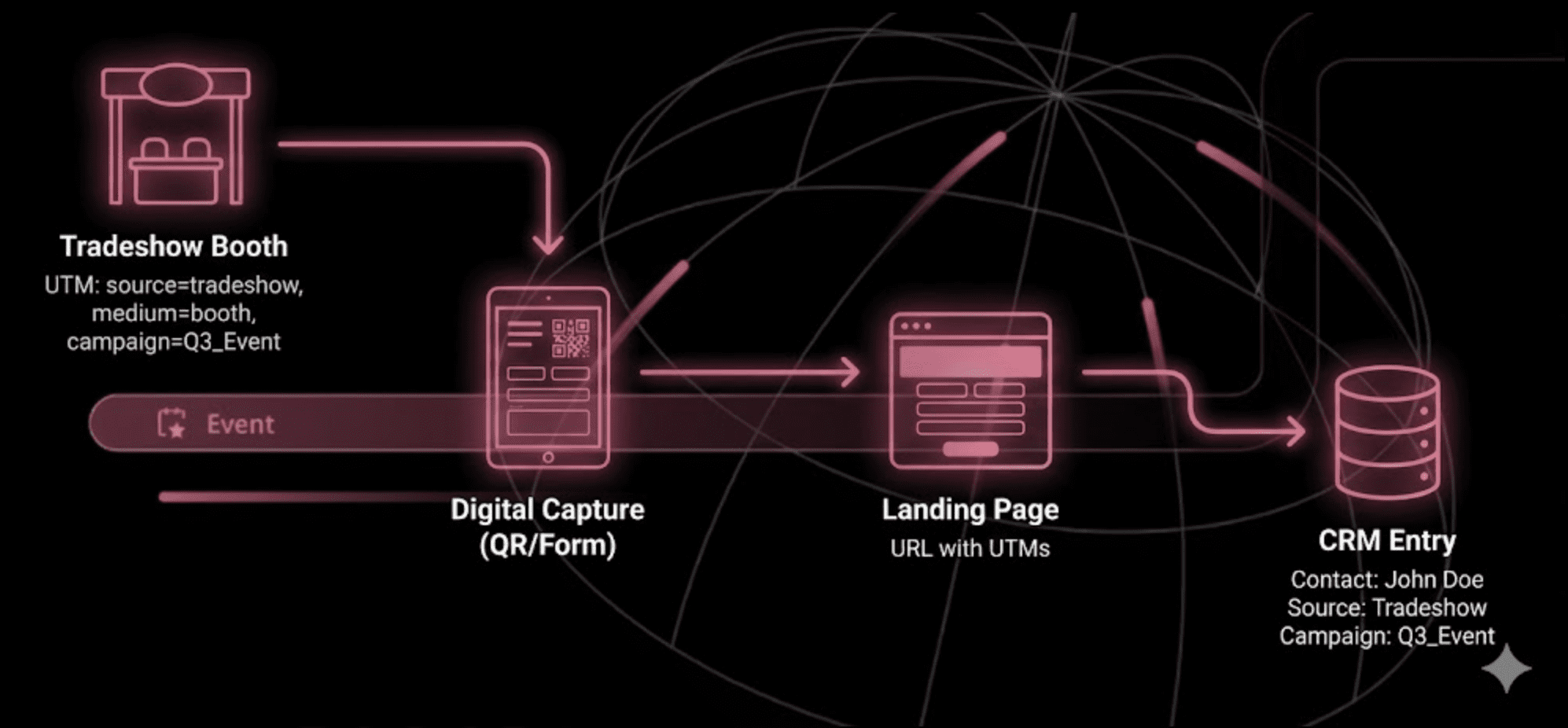
4. Attribution Survives The Full Sales Cycle
Tradeshow leads don't close at the booth. They download content three weeks later, attend your webinar in month two, and request a demo in month three. Most attribution systems lose the tradeshow source somewhere along that journey.
Trakt maintains attribution through the entire sales cycle. When that lead converts 90 days after the event, the tradeshow still gets proper credit. You can finally prove which events drive revenue, not just which ones generate badge scans.
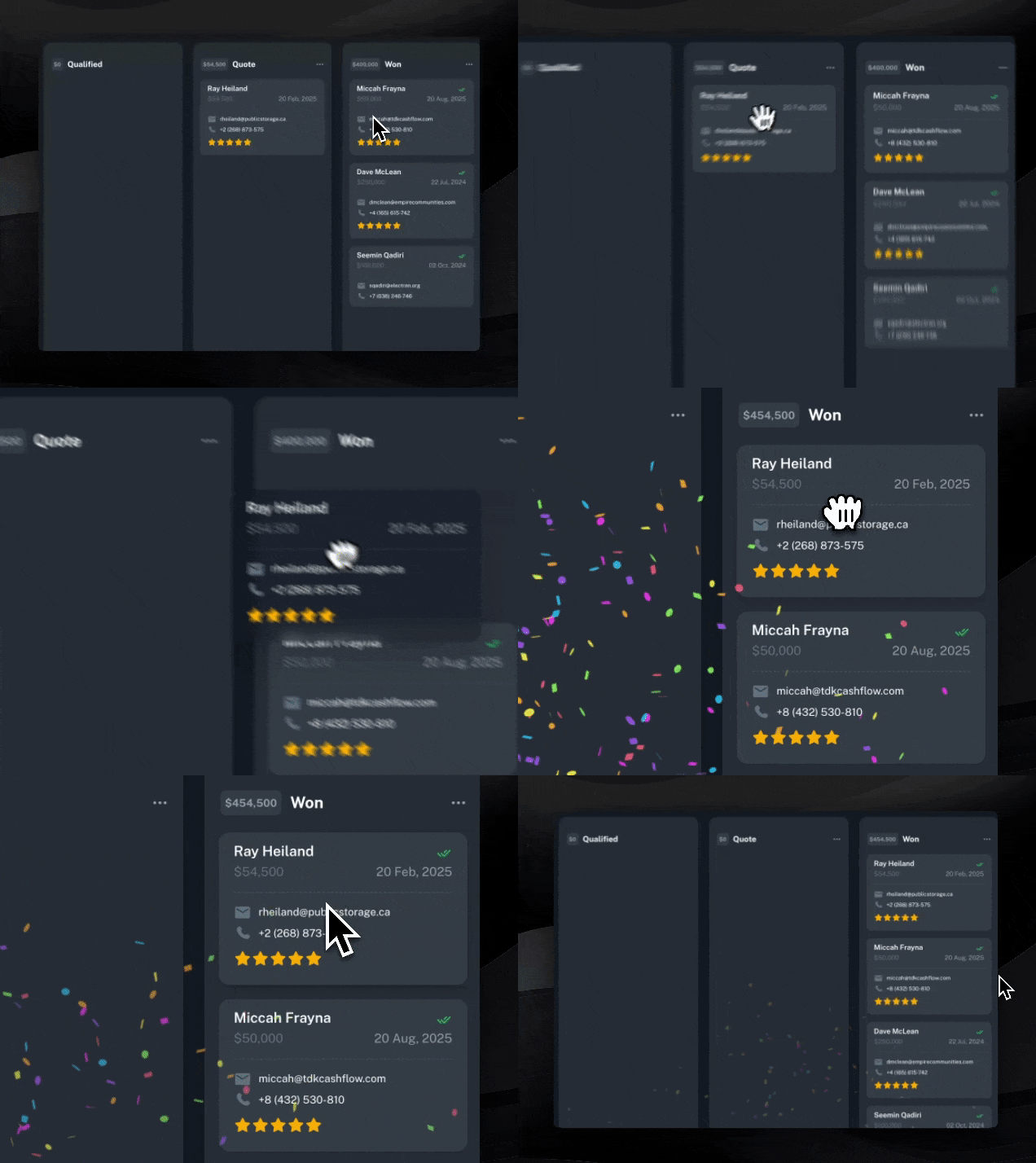
This is what a purpose-built tradeshow dashboard like Trakt looks like in practice. Clean data. Clear visibility. Both teams aligned. No spreadsheet chaos.
Stop Guessing, Start Tracking
Tradeshows are too expensive to run on broken data.
If you can’t prove which events generate revenue and which don’t, you’ll keep defending budgets instead of directing them.
Centralized dashboards fix that. Trakt is one example of what that system looks like when it’s built specifically for events.
- Single source of truth for both teams.
- Real-time visibility during events.
- Automated lead distribution and visibility.
- Attribution that actually follows the full sales cycle.
Your next tradeshow is coming. Stop drowning in spreadsheet versions and start tracking what actually matters.
See how Trakt turns tradeshow chaos into revenue-proof attribution.